
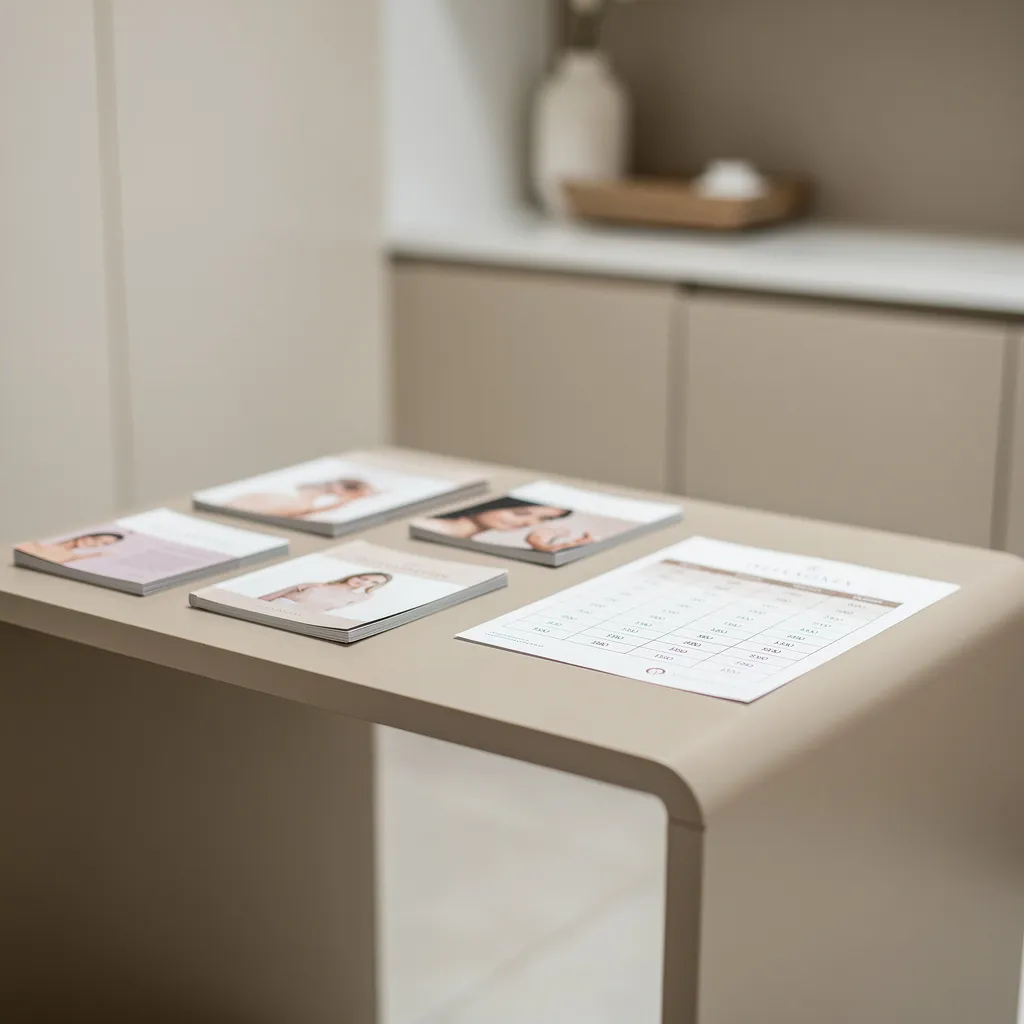
- Free consultations attract patients who are not yet decided. Paid consultations attract patients who are ready to act.
- UK clinics offering free consultations report no-show rates of 40 to 60 percent. Charging £30 to £50 drops this to 5 to 15 percent.
- A patient who paid to consult asks "is this treatment right for me?" A patient who consulted for free asks "how much is it elsewhere?"
- The highest-trust aesthetic clinics in UK charge for consultations because it signals the practitioner's time and expertise have value.
- Switching from free to paid loses price shoppers and gains treatment-ready patients. Revenue per consultation slot rises.
You opened the diary on Monday morning and saw eight consultations booked for the week. By Friday, three had ghosted, two showed up to ask about prices at the clinic down the road, and one wanted to know if you would price match a Groupon deal. Only two booked treatment. You paid for those leads. You paid for the room. You paid your time. The maths does not work.
This is not a marketing problem. It is a qualification problem. And it starts with two words at the top of your funnel: free consultation.
What the word "free" signals before the patient walks in
The intent filter: what free selects for
Language sets expectations before a patient ever walks through your door. When you offer a free consultation, you are telling the market three things at once. You are saying your time has no cost. You are saying the appointment carries no commitment. And you are saying the patient is not yet expected to decide anything.
Patients who respond to that message are doing exactly what you invited them to do. They are gathering quotes. They are comparing. They are taking a no-cost option because you offered one.
Compare this to how patients behave when they pay for a consultation. The act of putting £40 on a card before the appointment changes the internal monologue. The patient is no longer browsing. They are evaluating. They have invested. They show up with a different posture. They listen differently. They decide differently.
Why price-sensitive patients are the most expensive to serve
A patient who arrived because the consultation cost nothing is statistically more likely to be in the research phase. They have read about the treatment. They want to see what the room looks like. They want to hear the price. They are not yet committed to acting in this clinic, this month. And they are occupying a clinical slot that could have been filled by a patient who is.
The clinic down the road also offers free, and so does everyone on Treatwell
The clinics in your area that have built durable practices are not the ones with the loudest free offers. They are the ones whose consultation fee feels like the first sign that this practitioner treats their work as medicine, not retail.
The economics of a free consultation slot
What an empty slot actually costs
Sit with a calculator for ten minutes and the numbers become obvious. Take a clinic with a Tuesday diary built around free 30-minute consultations. Eight slots offered. With a typical 40 to 60 percent no-show rate on free appointments, three to five of those slots are dead air. The practitioner sits in the room. The receptionist sent reminders. The marketing team paid to fill the slot. Nothing returns.
The no-show rate problem: 40-60% on free bookings
I spoke to a clinic owner who had been running free consultations for three years. Her no-show rate was sitting at around 50 percent. She had assumed it was the patients, that her area attracted a certain type of person who was difficult to pin down. When we ran the numbers and compared against a clinic with a similar lead source but a £40 consultation fee, the gap was stark. Same type of patient, same treatments, same local market. One clinic had a 12 percent no-show rate. The other had 50. The only structural difference was the price of entry.
The hidden cost of a free model is not the unbilled hour. It is the opportunity cost of every slot you gave to someone who was never going to book. That slot could have served a paying patient. The practitioner could have been treating, not selling.
Run the same diary with a £40 paid consultation. No-shows drop to between 5 and 15 percent immediately. The patients who paid arrive ready to spend longer than 30 minutes thinking about treatment. The conversion rate to a booked procedure rises, not because the consultation is better, but because the patient who showed up is a different patient.
One paying patient vs. four free-consultation no-shows

Curious what your true cost per attended consultation looks like? We map it in 30 minutes.
Book a 30-minute diagnosticWhat changes when you charge for a consultation
The £30 deposit that filters out 80% of your no-shows
Move from free to paid and three things shift inside the first month.
First, the question changes. A patient who paid to consult walks in asking "is this treatment right for me?" A patient who consulted for free walks in asking "how much is it elsewhere?" These are different conversations. The first is a clinical conversation. The second is a procurement conversation.
Why a paid consultation signals quality, not inconvenience
Second, the relationship begins on the right footing. A free consultation creates a dynamic in which the clinic gives and the patient takes, before any trust has been built. The patient learns that the clinic's time can be claimed at no cost. That lesson colours every subsequent interaction. The paid consultation flips it. The clinic offers expertise. The patient offers value in exchange.
Third, post-consultation behaviour changes. Patients who paid are far more likely to read the aftercare email, return for the planned review, and book the second treatment. They have already shown, with their wallet, that this practice matters to them. Adherence rises. So does lifetime value.
What the patient who paid to consult is thinking versus the one who didn't
You will lose patients in the transition. That loss is the point. The patients who walk away when the consultation becomes paid are the ones who were never going to convert to a booked treatment anyway. You are not losing revenue. You are losing wasted hours.
How to make the switch without losing patients you want
How to frame a consultation fee as a trust signal, not a cost
The mechanics of changing your model matter less than the messaging that surrounds the change. Patients do not object to paying for a consultation. They object to paying without understanding why. Frame the fee, and the objections evaporate.
Set the fee somewhere between £30 and £75. Below £30 the signal is weak. Above £75 you start to push against the upper edge of what is comfortable for most UK aesthetic markets. Apply the fee to a first treatment if the patient books within a defined window. This is a credit, not a discount. The language matters.
What to say when a patient asks why you charge
Update every patient-facing touchpoint at the same time. The website, the Google Business profile, the Instagram bio, the voicemail, the receptionist's script. Inconsistency between channels is the single biggest reason these switches fail. A patient who saw "free" on one page and "£40" on another assumes the clinic is hiding something.
Train your front desk for the conversion conversation. The phone enquiry will sometimes ask "is the consultation free?" The wrong answer is "no, it's £40." The right answer is a sentence about why this consultation is a clinical assessment, what the patient will receive in the room, and how the fee converts into treatment if they choose to move forward. Same fee. Completely different conversation.
The clinics in UK aesthetics that charge and win
Expect a temporary dip in consultation volume in weeks one to four. Expect a sharper rise in conversion to treatment from week three onwards. By month two, most clinics see total treatment revenue rise, even though the number of consultations in the diary has fallen. You are filling a smaller funnel with better-qualified patients.
The biggest objection inside the clinic is not from patients. It is from owners who have spent years building their lead flow around the free model and worry that the brand will lose accessibility. Accessibility is not the same as free. The clinics with the strongest patient relationships in this country charge for the first appointment and have waiting lists. Their patients do not feel locked out. They feel chosen.
If your diary is full of no-shows, price shoppers, and consultations that go nowhere, the fix is not more ads. The fix is changing the price of entry to your clinic. Book a 30-minute diagnostic at Aurea Growth and we will walk through your current numbers, your local market, and a realistic switch plan you can roll out in two weeks.